Helicopter Pilot License
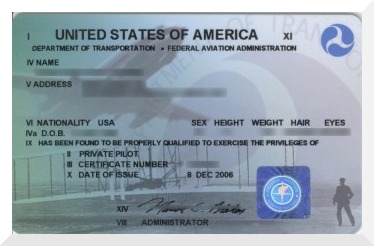
There are a number of steps that must be undertaken to obtain your helicopter pilot’s licence, regardless of the
country you are living in. This section will set out those that are common to all helicopter pilot training programs.
These programs will enable you to get your 'basic helicopter licence', better known as the Private Pilot Licence for
Helicopters (PPL-H). You can find details of training centres here.
programs.
These programs will enable you to get your 'basic helicopter licence', better known as the Private Pilot Licence for
Helicopters (PPL-H). You can find details of training centres here.
With the PPL-H, you are restricted to non-commercial flying activities only, so if you are planning to start
commercial helicopter flying services, you must obtain an additional, appropriate licence. There are licences for
commercial use, transportation, and flying by instrument ('night flying'). Finally, there is the phenomenon of
the type ratings, which mean that, unlike with a licence to drive a car, you cannot fly every type of helicopter
with just one licence. Instead, a brief training program must be undertaken for every type of helicopter, and
if you pass, you get your type rating for that particular aircraft.
Note that the structure of helicopter training programs and their licensing systems are identical to those of
fixed wing aircrafts. However, helicopter training is more expensive because helicopters are more expensive to
use and purchase.
Basic training modules
The helicopter training modules which must be followed to get your Private Pilot Licence are:
- Medical check. It is recommended that this is undergone before commencing a full
training program, to prevent you from losing money if you do not pass the medical
examination.
- Air law. Knowledge of the rules that apply when flying an aircraft.
- Helicopter theory and principles of flight. Understand how and why helicopters fly.
- Radio Telephony. Familiarisation with the procedures used to communicate with Air Traffic Control and other pilots.
- Navigation. Learning how to find your way around when airborne.
- Meteorology. This is an integral part of flying, and so a basic understanding of it is important.
- Human Performance and Limitations. The human factor plays a crucial role in the systems of both machine and pilot.
- Flight Performance and Planning. Learn how to plan a flight and understand the role of flight performance.
- Practical flying training
- Hours under the supervision of an instructor
- Hours of solo flight
- Exam to prove your flying skills
Note that these modules are the same for fixed wing pilots. The only difference is in the module
on helicopter theory and principles of flight, which is very different to the one taken for fixed wing aircraft.
You can take each module’s exam individually, and it is possible to study the modules without being under
the supervision of a flight school. Contrary to a common misperception, a special knowledge of mathematics is
not required.
Also check the section on helicopter flight simulation.
Kinds of licenses
- The PPL-H licence (Private Pilot Licence - Helicopters) gives you the right to fly helicopters for private use only.
You are not allowed to start up any commercial
activities, such as the transportation of people or sightseeing tours.
- The CPL-H (Commercial Pilot Licence - Helicopter) gives you the right to act as
a pilot on a commercial basis by, for example, flying sightseeing tours or carrying
out photo
/ film flights. The training, exams, and medical involved are all based on a higher
quality standard. The CPL-H program is undertaken after the PPL-H program.
- The ATPL-H (Airline Transport Pilot Licence) is needed to work on an airliner (transportation
of
people and / or cargo).
- IFR rating (Instrument Flight Rules). If you want to be able to fly in weather which
limits visibility, with
limited sight and / or at night, you must be able to fly on your instruments only,
with no visual references. This is called flying under Instrument Flight Rules.
Type ratings
When you have a Pilot’s Licence for flying helicopters, you can only fly the type of helicopter that was used
in your training program. If you want to change to a different craft, you must go through a type rating program,
which will familiarise you with this type of helicopter before you are allowed to fly it.
Differences between Countries around the World
The legislation relating to airman certification is regulated by national authorities, and is therefore country
dependant. However, there are many similarities, due to efforts that have been made to harmonize them
(e.g. the FAA and EASA regularly communicate with each other).
 Europe
 United States of America
|
The Pilot's handbook
Everything you will ever need to know about navigation, air laws, weather, airspace classes, radio communication, FAA rules, airport operations,
and much more is concisely set out in this handbook. The text is well illustrated, with over 250 charts, graphs and illustrations,
making this bestseller essential reading.
|
|
Do I Like Helicopter Flying?
If you are asking yourself this question, then this is your book. It describes what a helicopter pilot's job is like,
and it is also a very informative text about helicopter flying, emergency procedures, and helicopter flight
principles. However, the real strength of this work is that it really does give you a feeling of what it is like
to fly helicopters So, if you are still looking for the answer to the question posed above then get this book.
|
Comments are disabled.